
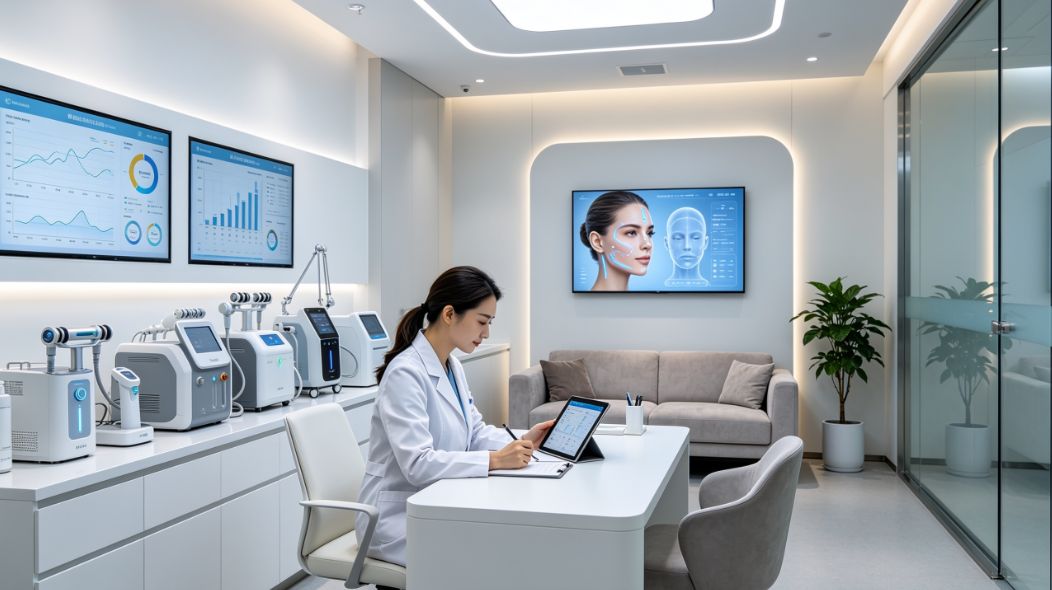
Digital health technology continues to reshape healthcare delivery, and aesthetic medicine is part of that shift. Research published by the American Medical Association shows that digital tools, data platforms, and connected technologies have become increasingly important across medical practices, improving communication, operational efficiency, and patient engagement. Modern medical spas now operate with sophisticated treatment devices, cloud-based software, online scheduling, customer relationship management systems, and advanced analytics. As these technologies become more connected, they also change how clinics communicate with prospective and returning patients.
Technology has raised expectations on both sides of the patient journey. People often research procedures before booking a consultation, compare providers online, and expect smooth digital experiences from their first website visit through post-treatment follow-up. Despite these changes, many clinics still rely on marketing approaches that were designed for traditional businesses rather than technology-enabled healthcare practices. Discussions around full-service med spa marketing increasingly focus on helping clinics connect digital tools, patient education, and operational data into a more consistent experience rather than treating them as separate functions. This difference highlights why agencies with experience in medical aesthetics often approach digital communication differently.
1. Advanced Treatment Technology Requires Accurate Digital Communication
Medical spas increasingly invest in technologies such as AI-assisted skin analysis, laser systems, radiofrequency microneedling, and body contouring equipment. These innovations introduce technical concepts that many patients encounter for the first time during their online research.
Clear explanations help patients understand what treatments involve without creating unrealistic expectations. Experts from the U.S. Food and Drug Administration (FDA) regularly emphasize that medical devices should be presented accurately and that promotional claims should remain consistent with approved uses. Marketing professionals who understand aesthetic medicine are generally better prepared to translate complex clinical information into language that patients can easily understand while maintaining accuracy.
2. Patient Data Platforms Create Better Marketing Opportunities
Appointment systems, customer relationship management software, and electronic medical records generate valuable insights throughout the patient journey. These systems reveal how patients discover a clinic, when they schedule consultations, and which services generate ongoing interest.
Technology alone, however, does not automatically improve communication. The value comes from interpreting information responsibly. Guidance from the Office of the National Coordinator for Health Information Technology highlights how healthcare organizations can use digital health information to improve patient engagement while protecting privacy. Agencies familiar with healthcare environments understand how to use aggregated marketing insights without compromising patient trust.
3. Connected Digital Ecosystems Require Integrated Strategies
Today’s medical spa rarely depends on a single digital platform. A prospective patient may first discover a clinic through search engines, schedule online, receive automated appointment reminders, complete digital intake forms, and receive follow-up communication after treatment.
Every platform contributes to the overall patient experience. When these systems operate independently, communication can become inconsistent. Research from Gartner consistently shows that organizations gain greater value when digital technologies are integrated instead of managed separately. For medical spas, this means websites, scheduling software, customer databases, email campaigns, and patient education tools should support one another throughout the customer journey.
4. AI and Analytics Make Marketing More Measurable
Artificial intelligence has expanded how clinics evaluate marketing performance. Modern analytics platforms track website visits, appointment requests, consultation conversions, and long-term patient retention with far greater precision than traditional advertising methods.
Data provides direction, yet numbers alone rarely explain patient behavior. The World Economic Forum notes that AI works best when combined with human judgment, particularly in healthcare where trust and communication influence decision-making. Agencies that understand medical aesthetics can interpret analytics within the context of patient education, treatment planning, and long-term relationships instead of focusing exclusively on advertising metrics.
5. Educational Content Has Become Part of the Technology Experience
Technology has transformed patient education. High-resolution imaging, digital consultations, treatment simulations, and interactive content allow patients to learn more before visiting a clinic.
Educational resources have become part of the service itself rather than a separate marketing activity. The National Institutes of Health has published research showing that better health communication supports informed patient decisions and encourages stronger engagement with healthcare providers. Content that explains treatment options clearly can therefore improve understanding while helping patients develop realistic expectations before their consultation.
6. Online Reputation Is Built Across Multiple Digital Platforms
Reviews, social media discussions, local search listings, and healthcare directories all influence how patients evaluate providers. Reputation develops across many digital channels rather than through a single website.
BrightLocal’s Local Consumer Review Survey continues to demonstrate that online reviews remain one of the most influential factors in local purchasing decisions, including healthcare services. Because medical aesthetics combines healthcare with consumer decision-making, reputation management requires consistent messaging, thoughtful responses to patient feedback, and accurate information across every digital platform.
7. Compliance Becomes More Important as Technology Advances
Digital advertising has expanded rapidly, yet healthcare communication remains subject to higher standards than many other industries. Privacy requirements, responsible advertising practices, and truthful treatment descriptions become increasingly important as artificial intelligence and automated content generation become more common.
The American Medical Association and the Federal Trade Commission both provide guidance that emphasizes transparency in healthcare communication and truthful advertising practices. Marketing teams familiar with medical aesthetics generally understand that building trust depends on accurate educational content, responsible claims, and careful handling of patient information.
8. Technology Delivers Better Results When Marketing Reflects Clinical Expertise
Every technological investment, whether it involves advanced treatment equipment, cloud-based patient management, analytics dashboards, or digital consultation tools, ultimately serves one purpose, improving the patient experience. Technology creates opportunities, yet those opportunities become meaningful only when patients understand the value behind the innovation.
This is where a comprehensive approach becomes increasingly valuable. Rather than treating websites, analytics, patient education, reputation management, and automation as separate activities, many clinics explore full-service med spa marketing to align communication with their clinical expertise and digital infrastructure. The emphasis is less about promotion and more about ensuring that technology investments remain visible, understandable, and useful throughout the patient journey.
You may also want to read: How Digital Marketing Agencies Use Software and Hardware Compatibility?
Conclusion
Medical spas have evolved into technology-driven healthcare businesses that depend on connected software, intelligent devices, and digital communication. These tools improve efficiency, strengthen patient engagement, and provide valuable operational insights. Still, technology alone cannot explain procedures, answer patient concerns, or establish lasting trust.
As healthcare technology continues to advance, communication becomes just as important as innovation itself. Clinics that combine modern digital systems with informed, accurate, and patient-centered marketing are better positioned to help people understand their services without sacrificing transparency or credibility. Looking ahead, the strongest competitive advantage may come from aligning technology, clinical knowledge, and thoughtful communication into one consistent patient experience.